
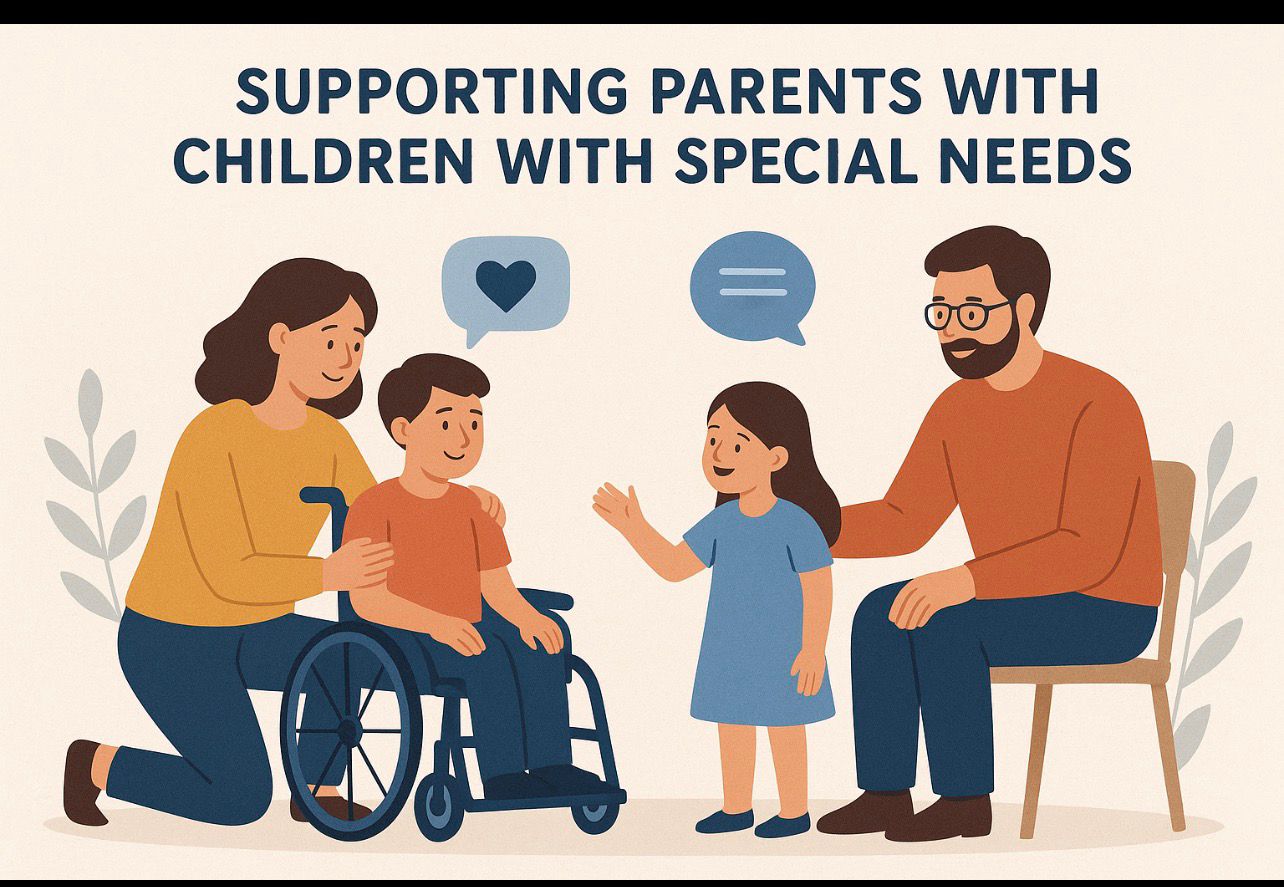
The Quiet Strength of Special Needs Parents
Parenting is a journey that is full of joys, sleepless nights, difficult decisions, and beautiful moments. Raising a child with special needs comes with many additional layers of complexity: emotional, social, financial, and physical. These parents become, not only caregivers, but advocates, therapists, teachers, and cheerleaders for their child while also attempting to maintain their own well-being
Yet, beyond the surface of strength and resilience, many of these parents experience loneliness, fatigue, guilt, and societal judgment. While professionals may support the child through therapy and interventions, what parents truly need from the rest of us is empathy, patience, and understanding.
Here are seven simple yet powerful ways we can show real support to parents of children with special needs and make their journey just a little lighter.
- Listen Without Trying to Fix It
When parents share about their losses, may it be the seemingly failed therapy session or sleepless night, what they are looking for truly is an attentive ear without being rushed with someone else's solutions. Their lives are filled with decisions, advice, and problem-solving. The presence of a safe, nonjudgmental listener can be rare and healing.
Go with: "That sounds overwhelming. I’m really glad you shared it with me."
Don't go with: "Have you tried this app, or have you tried therapy with that person?"
Research suggests that support given to parents of children with disabilities through emotional presence and not mere practical assistance were significantly lowering stress and improving psychological well-being (Neely-Barnes etal, 2011).
- Avoid Comparisons and Generalizations
While statements like "All kids will act out sometimes" or "My cousin's son had that, but he grew out of it" may be well-intended, these kinds of comments may actually be hurtful. The parents are not looking for the consolation of hearing that things will "get better"; what they are actually looking for is an acknowledgment of their present challenges.
Every child has his/her own needs, diagnosis, and development. Even two children with autism may be completely different in their abilities, triggers, and routines.
- Offer Tangible, Thoughtful Help
Most parents are too tired or afraid to request help, even when they most need it. That's why generic offers such as "Let me know if you need anything" tend to go unclaimed. The trick is to provide specific and feasible help — without anticipating reciprocation.
Here are some ideas:
- Keep an eye on their other children for one hour while they go to a session.
- Sit with them for a therapy break and have a coffee together.
- Sometimes, even a 10-minute call or a meme that reads "I thought of you" can brighten up their day.
- Be Compassionate in Public Settings
Families with kids having problems with sensory processing, ADHD, or autism, such children may become meltdowns in public. But even at the moment when the child is exploding, the parent is usually having a panic attack-not because of the eruption itself but by how the world even appears to react.
Instead of staring, sighing, or walking away, be the nice person who:
- Smiles in reassurance
- Offers help, but not forcing it
- Says, "You're doing great-hang in there"
Kindness in public places is powerful. It reduces the parent’s shame, and replaces judgment with humanity.
- Show Willingness to Learn
It goes a long way when an individual takes the effort to learn a bit about a child's needs or diagnosis. You don't need to become a specialist, but your indication to be educated expresses respect and true concern for the family.
Ask: "Is there anything I should keep in mind when interacting with your child?"
Or: "Would it be helpful if I knew a little more about what they like or what sets them off?"
It makes parents feel less isolated, and better understand something that they frequently yearn for in their daily interactions.
- Celebrate Progress No Matter How Small
Some families mark milestones differently. A simple thing for some can be something grand for the parent: making eye contact, solving a puzzle, or saying a new word months or years in the making.
So when the parents celebrate these victories, join in the celebration. Let them know how important those times are.
Say, “That’s amazing! I know how much you both worked for that.”
Say, “You’re doing such an incredible job this is a huge win.”
Acknowledging and celebrating the efforts put in gives parents the extra motivation they need to keep pushing through even on those hard days.
- Don’t Judge Their Parenting Style
Kids with special needs often need individualized routines, communication aids, therapies, and adaptations. They might seem strange to those outside the community such as relying on visual schedules, sensory swings, stim toys, or using tablets to communicate.
You might not agree with every decision, but rather than questioning them, assume parents are doing their best for their kid.
Say: "I appreciate your patience and how you stand up for your child."
Never: "Should they still be using that stroller?" or "That's too much screen time."
Instead of criticism, provide reassurance. They already hear enough judgment from the world that what they need from you is to believe in what they've chosen.
Conclusion:
Parents of children with disabilities are not superheroes — they're human beings tackling complicated situations with love, intent, and vulnerability. They bear an unseen mental burden, and though they complain very little, they treasure being understood and appreciated.
Your generosity be it a listening ear, an outstretched hand, or a warm smile in public can become part of their resilience.
Let's move the conversation from pity to partnership, from silence to support, and from distance to connection.
Together, we can make the world a little kinder for these parents one act of empathy at a time.
References
Neely-Barnes, S. L., Hall, H. R., Roberts, R. J., & Graff, J. C. (2011). Parenting a child with an autism spectrum disorder: Public perceptions and parental conceptualizations. Journal of Family Social Work, 14(3), 208–225. https://doi.org/10.1080/10522158.2011.571539