
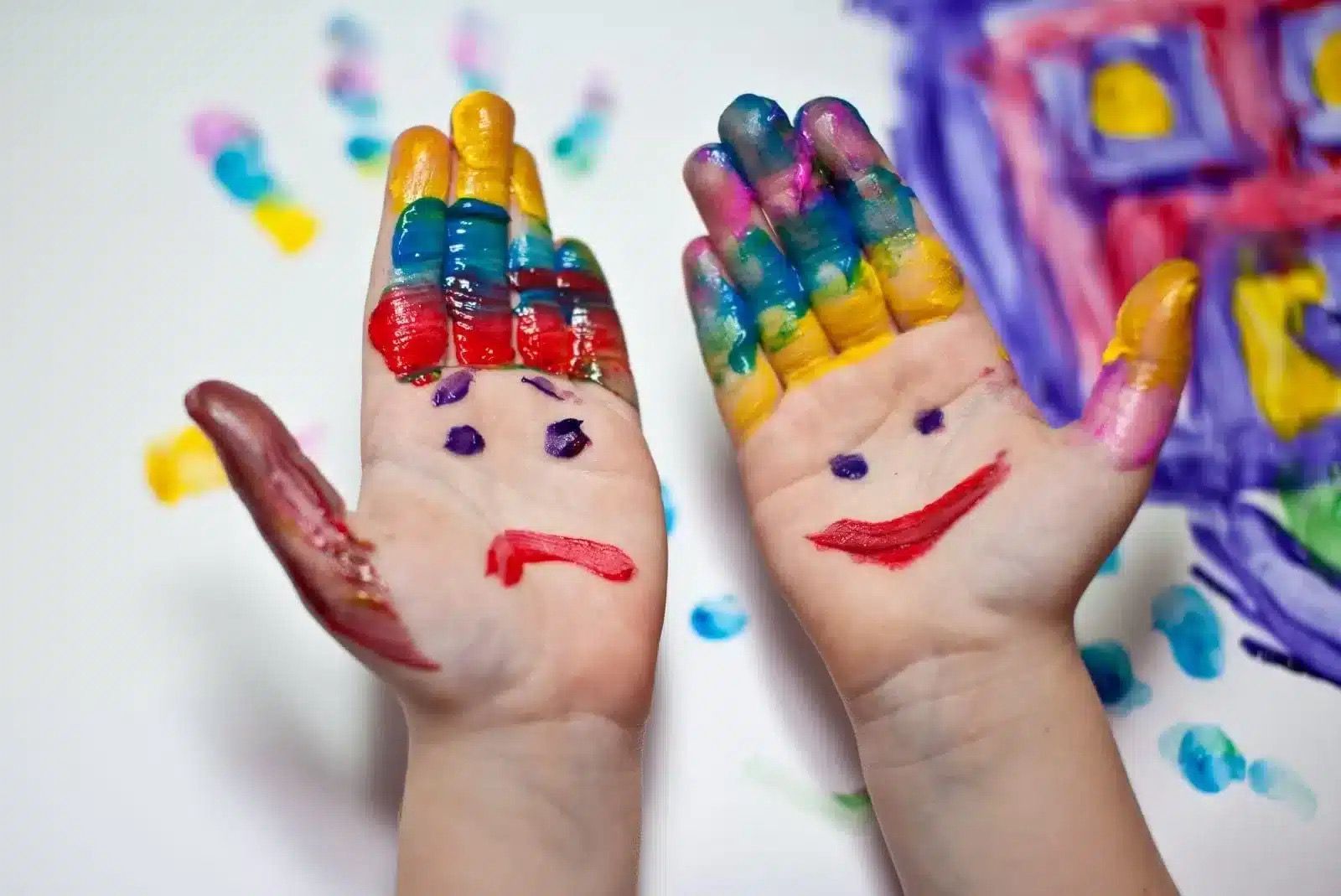
Children live in a world of feeling before they live in a world of words. A scribble, a splash of color or a piece of clay they all can carry more than we might think. Art therapy offers a bridge, a way for children to express what’s inside them.
What is art therapy?
Art therapy is a form of psychotherapy that uses creative processes like drawing, painting, sculpting, and other art-making activities to facilitate emotional, psychological, and social well-being.
Rooted in the belief that artistic expression can help individuals communicate feelings and thoughts that might be difficult to express verbally, it acts like a safe space for a child to express openly. For neurodiverse children, it’s not about artistic skill, it's about freedom, sensory regulation, and emotional exploration.
Why Art Therapy Works for Neurodiverse Children?
In our sessions, the shadow teacher integrates art therapy principles to support neurodiverse children in expressing themselves beyond words.
She begins by creating a calm, accepting environment—one where the child immediately senses that there is no “right” or “wrong” way to make art. This foundation of safety and trust allows the child to engage freely, without fear of judgment or pressure.
She is mindful that children with neurodiverse profiles often process the world differently. Some experience sensory overload, others struggle to verbalize emotions or find it hard to regulate their responses. Through art, she provides a space where expression becomes natural and accessible.
When a child begins to draw, paint, or mold clay, she observes closely how their nonverbal communication unfolds. For many autistic children, emotions that are difficult to describe verbally begin to surface visually—through color choices, shapes, and movement. The shadow teacher then uses these cues to understand the child’s inner state without forcing conversation and places further interventions accordingly.
She also incorporates sensory integration into her sessions. The tactile nature of clay, the smooth flow of paint, or the textured feel of paper helps children explore sensory input in a controlled and soothing way. She notices that this sensory engagement often leads to greater comfort, attention, and emotional balance.
In our sessions, the shadow teacher integrates art therapy principles to support neurodiverse children in expressing themselves beyond words.
She begins by creating a calm, accepting environment—one where the child immediately senses that there is no “right” or “wrong” way to make art. This foundation of safety and trust allows the child to engage freely, without fear of judgment or pressure. This also helps in rapport building between the child and their shadow teacher.
She is mindful that children with neurodiverse profiles often process the world differently. Some experience sensory overload, others struggle to verbalize emotions or find it hard to regulate their responses. Through art, she provides a space where expression becomes natural and accessible.
When a child begins to draw, paint, or mold clay, she observes closely how their nonverbal communication unfolds. For many autistic children, emotions that are difficult to describe verbally begin to surface visually—through color choices, shapes, and movement. The shadow teacher then uses these cues to understand the child’s inner state without forcing conversation and places further interventions accordingly.
She also incorporates sensory integration into her sessions. The tactile nature of clay, the smooth flow of paint, or the textured feel of paper helps children explore sensory input in a controlled and soothing way. She notices that this sensory engagement often leads to greater comfort, attention, and emotional balance.
The Science Behind It
Art therapy taps into multiple neural systems at once—visual, motor, sensory, and emotional. For neurodiverse children, this multi-sensory engagement helps bridge the gap between thought and feeling.
When the child is engaged in creating art during the session, it has been observed the child feels happy, feels relaxed, their attention span has increased and there’s motivation to complete it which is a result of the dopamine that is released which leads to this behavior.
Due to rhythmic, repetitive movements a sense of calmness is noticed in the child which is due to parasympathetic relaxation which reduces anxiety within the child.
Lastly the whole process engages the child, we observe that the child gets regulated and many emotional concerns are reduced which is due to the process of the prefrontal cortex which is supporting planning and emotion regulation—areas that can be underactive in ADHD or autism.
How it works in practice
In our each session a different structure is followed based on the child’s needs:
- Creating Safety & Trust: the shadow teacher first begins with reassurance and a gentle tone, emphasizing that art is about feeling, not perfection. This causes a feeling of safety, calmness and trust within the child and also forms a rapport with our shadow teachers.
- Choosing the Medium: Based on the child’s comfort and sensory preferences, we offer materials like crayons, paint, or clay. This is done by the shadow teachers to ensure the child is not getting overwhelmed with the materials they are given. So materials are selected based on the child’s needs.
- Free or Structured Expression: Sometimes she provides prompts such as “draw a place where you feel calm,” while other times she allows free exploration. When we have to derive a specific information we do a structured expression but if the purpose is to just express we follow a free expression, again the method is selected based on the needs and goals we are working on.
- Reflection: Once the artwork is complete, she invites the child to observe their creation and, if comfortable, share what they feel or notice.
- Integration: Finally, she helps connect the art experience to real-life situations—linking the emotions expressed in the artwork to moments at school, at home, or with friends.
Examples of Activities
- For sensory regulation: finger painting, clay modeling, sand art.
- For emotional awareness: color-your-feelings activity, “my calm space” drawing.
- For social connection: group murals or collaborative collage.
- For self-expression: mask-making or “draw your superpower.”
References :
Bosgraaf, L., Spreen, M., Pattiselanno, K., & van Hooren, S. (2020). Art therapy for psychosocial problems in children and adolescents: A systematic narrative review on art therapeutic means and forms of expression, therapist behavior, and supposed mechanisms of change. Frontiers in Psychology, 11, 584685. https://doi.org/10.3389/fpsyg.2020.584685
Buchalter, S. I. (2017). 250 brief, creative & practical art therapy techniques: A guide for clinicians and clients. PESI Publishing & Media.
Van Lith, T., Fisher, S., & Patel, R. (2024). Creative arts therapies for children with neurodevelopmental disorders: A systematic review. Children, 11(6), 706. https://doi.org/10.3390/children11060706
Yohannan, S. V., Ishnassery Pathrose, S., & Devassy, S. M. (2025). The effectiveness of art therapy in addressing emotional and behavioral issues and enhancing self-esteem of children living in residential childcare institutions: A feasibility study in Kerala, India. Arts & Health, 1–17. Advance online publication. https://doi.org/10.1080/17533015.2025.2527185